
Teaching Across
Borders
SEA TEACHER PROGRAM · BATCH 5
A personal blog documenting my pre-service teaching experience at
USHS — Central Luzon State University, Nueva Ecija, Philippines.
Pre-Programme · Arrival Week
My Journey to the Philippines : Arriving
at CLSU
What
Flight & arrival to CLSU
When
First day of the programme
Who
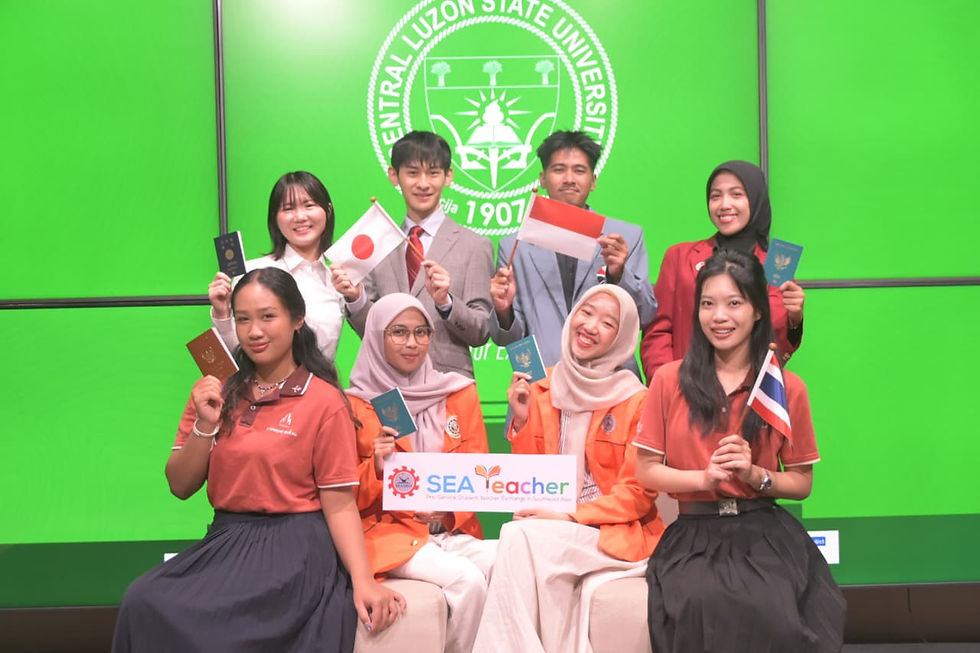
Me & fellow student teachers
Where
Indonesia → Manila → Nueva Ecija
Why
SEA Teacher Batch 5 practicum
On the first day of the SEA Teacher Programme Batch 5, I departed from Indonesia and
flew into Ninoy Aquino International Airport (NAIA) in Manila. I was both nervous and
excited — this was my first time travelling internationally for an educational purpose, and
I knew the next four weeks would change me in ways I could not yet imagine.
After landing in Manila, I made my way north toward Nueva Ecija. The journey itself was
already an experience — rice fields stretched endlessly on both sides of the road, and the
flat, agricultural landscape of Central Luzon felt nothing like home. That difference was
thrilling.
Upon landing, I was picked up at the airport by a staff member from the IAO (International
Affairs Office) of CLSU — a gesture that immediately made me feel looked after. By the
time we reached the campus, it was already midnight, so we went straight to rest at the
Alumni Hostel, where I would be staying throughout the programme. There was no grand
welcome that night — just the quiet relief of arriving safely and the soft hum of a new
place settling around me.
The next morning, I woke up at five o'clock — partly from the excitement, partly from the
unfamiliar sounds of the campus at dawn. That morning was when I properly met the IAO
CLSU staff, who warmly oriented us, walked us through the programme structure, and
made us feel genuinely at home. The campus is expansive and green — an agricultural
university where farms sit alongside academic buildings. Standing there in the early
morning light, I remember thinking: this is really happening.
"Every journey begins with a step beyond your comfort zone. Mine began with a flight
across the sea."


Weeks 1 – 4
A Day in My Life at USHS, CLSU
What
Daily school routine & activities
When
Monday–Friday, early morning to afternoon
Who
Me, cooperating teacher & students
Where
USHS — CLSU Campus
Why
Teaching practicum requirement
Each weekday at USHS started early. I would wake up at around five-thirty in the morning
to prepare my lesson materials, review my plans, and get ready before the school day
began at seven. The first week was mostly observation — I sat in on my cooperating
teacher's classes, took notes on how lessons were structured, how students were
managed, and how the Philippine curriculum was delivered in practice.
The school building was lively from the moment students arrived. Filipino high school
students are energetic, curious, and very sociable. During the first week there was also a
formal photoshoot event organised for all SEA Teacher participants, and a Cultural Emergence rogramme — a cultural exchange ceremony where we were officially welcomed into the USHS community alongside students and faculty.
From the second week onward, I began teaching my assigned classes under the
supervision of my cooperating teacher. Each day involved delivering lessons in the
morning, having lunch with fellow student teachers, and spending the evenings preparing
lesson plans for the following day. It was demanding — but every exhausted evening felt
worth it when I remembered the expressions on my students' faces when they
understood something new.


Throughout the Programme
The People Who Made This Journey
Unforgettable
What
Meeting new people from ASEAN
When
From day one through farewell
Who
Cooperating teacher, USHS students & fellow SEA Teachers
Where
USHS classrooms & dormitory
Why
Cross-cultural learning &collaboration
One of the most enriching aspects of the SEA Teacher Programme is the people you meet.
From the very first day at CLSU, I was surrounded by fellow student teachers from
Thailand, Indonesia, and Japan — each carrying different teaching styles, different cultural
backgrounds, and different reasons for joining this programme. Despite our differences,
we quickly became a tight-knit group, sharing meals, stories, and the daily rollercoaster of
being a student teacher far from home.
My cooperating teacher, Ma'am Aileen de Guzman, was incredibly patient and
professional. She guided me through the Philippine curriculum, helped me understand
how to adapt my lessons to Filipino learners, and gave me honest and constructive
feedback after each class I taught. I am deeply grateful for her mentorship — she did not
just supervise me, she genuinely invested in making me a better teacher. Her warmth and
encouragement made even the most challenging teaching days feel manageable.
The USHS students themselves were a joy to teach. They were enthusiastic, participative,
and kind to me even when my lessons were far from perfect. Some students would come
up to me during breaks to chat or ask questions, and those small interactions meant the
world. In the dormitory during evenings, we cooked together, talked about our home
countries, and laughed over shared experiences. It was in those moments — not just
inside the classroom — that true learning happened.
"We came from different countries, speaking different languages, carrying different stories.
And yet by the end, we called each other family."

.jpeg)
Weeks 2 & 3
Standing in Front of the Class : My
Teaching Weeks
What
Actual classroom teaching
When
Weeks 2 and 3, morning classes
Where
USHS classrooms, CLSU
Who
Me and my assigned USHS students
Why
Pre-service teaching practicum
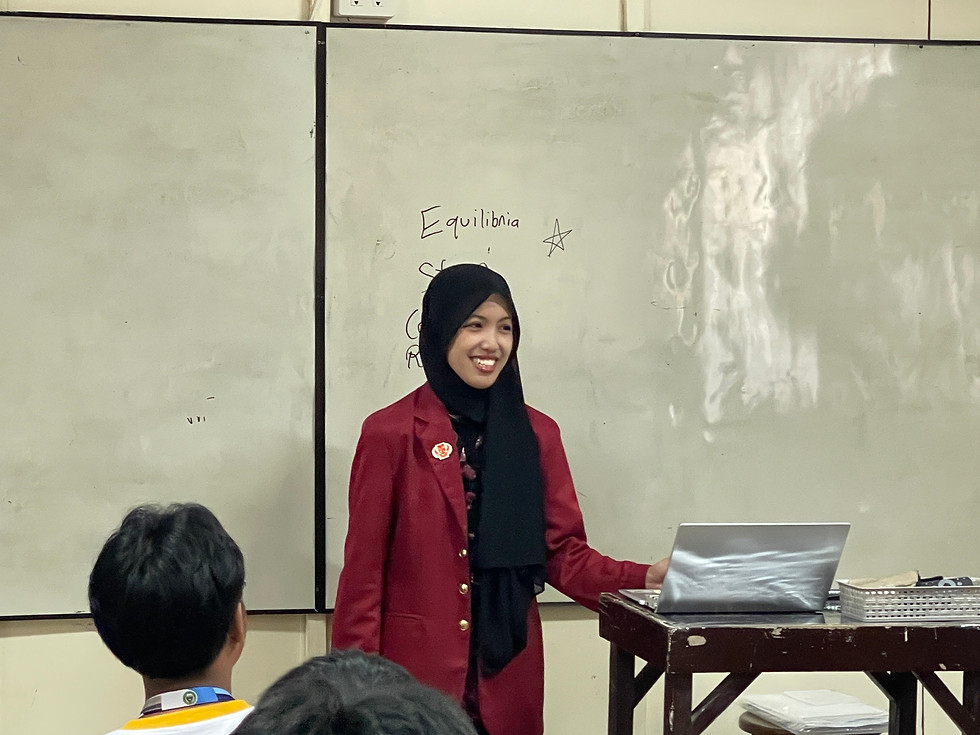
The second and third weeks of the programme were the heart of my SEA Teacher
experience — the actual teaching weeks. I was formally assigned classes to teach at USHS
under the guidance of my cooperating teacher, Ma'am Aileen de Guzman. Her mentorship
was invaluable throughout this period. Every evening before a teaching day, I prepared my
lesson plans carefully, reviewed my materials, and mentally rehearsed how I would deliver
the content.
Standing in front of a Filipino class for the first time was nerve-wracking. The classroom
was full of students looking at me — a foreign student teacher — with a mixture of
curiosity and anticipation. I reminded myself to breathe, smiled, greeted them in English,
and began. The first few minutes were the hardest; after that, I found my rhythm.
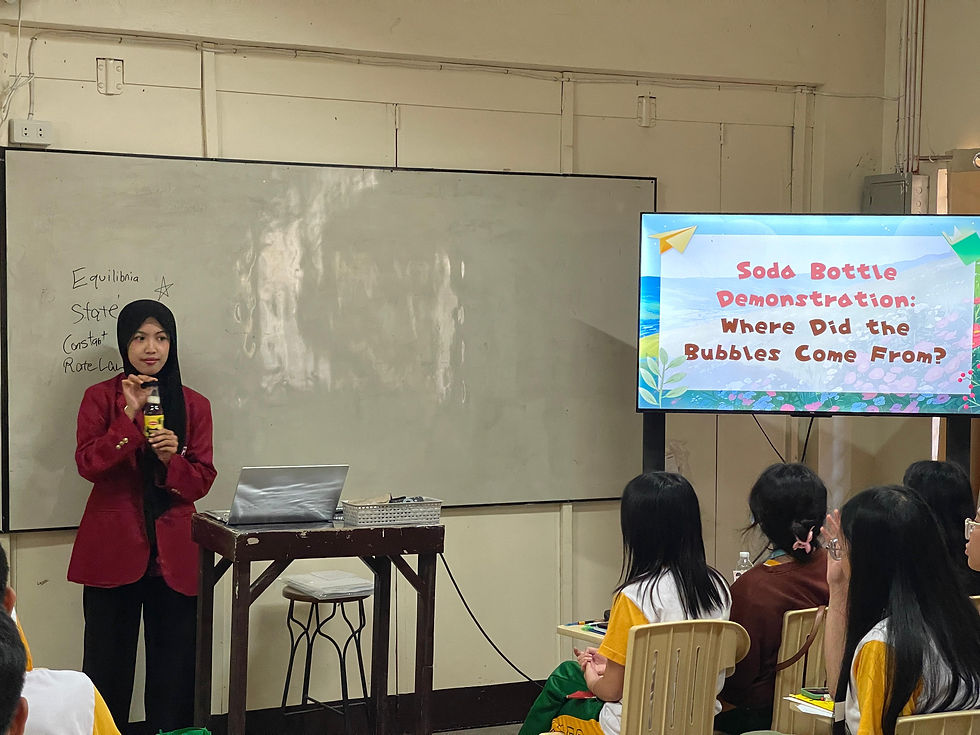
Throughout the practicum, I taught a total of three sessions. My first was a trial teaching,
which served as a warm-up to get comfortable with the classroom environment and the
students. The second session was my initial observation teaching, where Ma'am Aileen
formally observed my lesson and evaluated my delivery, classroom management, and
student engagement. The third and final session was my final observation teaching — the
culminating performance where everything I had learned and improved upon was put to
the test. Ma'am Aileen's detailed feedback after each observed session helped me grow
significantly from one class to the next. By the final observation, I was a noticeably more
confident and adaptive teacher than I had been at the very start.





Week 1 — Weekend Trip
Chasing Waves in Baler, Aurora : Pacific
Coast Excursion
What
Cultural excursion trip
When
First week, weekend day trip
Who
All SEA Teacher participants & CLSU coordinators
Where
Baler, Aurora — Pacific Coast of Luzon
Why
Cultural immersion and group bonding
During the first week of the programme, all SEA Teacher participants were taken on an
excursion to Baler, Aurora — a coastal province on the eastern shore of Luzon facing the
Pacific Ocean. We departed early in the morning by bus, and the journey took several
hours through the winding mountain roads of the Sierra Madre. The views along the way
were breathtaking — dense forest, mountain mist, and waterfalls glimpsed through the
windows.
We also visited Baler Church, one of the oldest churches in the Philippines, carrying
centuries of history in its stone walls. Walking through it, I felt the deep cultural heritage
of the Filipino people — a blend of indigenous tradition, Spanish colonial history, and
modern national identity. We tried local Baler cuisine together as a group, sharing meals
of fresh seafood and native Filipino dishes. The excursion to Baler was more than tourism
— it was a cultural immersion that helped all of us understand the Philippines far beyond
the campus. I returned to CLSU that evening tired, sunburned, and completely in love
with this country.
Baler is a town famous for its surfing culture, its powerful Pacific waves, and its deep
historical significance. When we arrived at Sabang Beach, I immediately understood why
the place is so beloved. The waves were enormous, rolling in from the open Pacific, and
the energy of the ocean was palpable. Some of my fellow student teachers tried surfing for the first time — the results were hilarious and the memories unforgettable.
Throughout the Programme
What I Gained Beyond the Classroom
What
Skills developed during practicum
Where
USHS classrooms, dormitory, excursions
When
Across all four weeks
Why
Immersive cross-cultural teaching environment
Who
Me, guided by my cooperating teacher
Before joining the SEA Teacher Programme, I thought I had a reasonable grasp of what
teaching involved. Four weeks at USHS taught me how much I still had to learn — and how
much I was capable of growing. The skills I developed during this programme went far
beyond anything I had studied in textbooks back home.
Adaptive teaching was the skill I developed most. I could not simply replicate the
approaches I had practised in Indonesia — I had to constantly read the room, adjust my
explanations, and find new entry points into the material. This flexibility is something I
now see as one of the most important qualities a teacher can have.
Cross-cultural communication was another major growth area. Every interaction — with
students, my cooperating teacher Ma'am Aileen de Guzman, and fellow SEA Teachers from
Thailand and Japan — required sensitivity and awareness. I learned to listen more
carefully, avoid assumptions, and find humour and warmth in miscommunications rather
than frustration.
Lesson planning under time pressure became a daily discipline. With real classes every
morning, I became more efficient at designing structured lessons, preparing materials,
and anticipating where students might struggle. Beyond teaching, I gained resilience —
living far from home, adapting to new food, managing the heat of Central Luzon, and
pushing through exhaustion all built a confidence in me that I had not possessed before
the programme.
Week 4 — Final Week
A Night of Stars : The Night of Talents at
USHS
What
Cultural performance night & farewell
When
Final week, evening event
Who
USHS students, SEA Teacher participants, teachers
Why
Showcase Filipino culture & celebrate the programme
Where
USHS venue, CLSU campus
The fourth and final week brought with it some of the most emotionally powerful
moments of the entire experience. On one of the last evenings, USHS organised a
Talents
Night of
— a spectacular cultural showcase in which students performed traditional Filipino
dances, music, spoken word, and cultural presentations for all the SEA Teacher
participants and school staff.
The performances were extraordinary. Students came dressed in traditional Filipino
costumes, their movements precise and graceful during the folk dance performances. The
music was live, the energy in the room was electric, and the pride the students showed for
their cultural heritage was genuinely moving. As a foreign student teacher watching, I felt
an overwhelming sense of gratitude — these students had welcomed me into their school,
and now they were sharing something deeply personal about who they are as a people.
There were also modern performances — dance numbers, spoken word pieces in Filipino
and English, and group acts that revealed the range of the students' talents. I remember
thinking how much artistic energy existed in that school, and how fortunate I was to be
there.
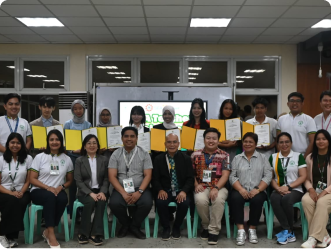
The farewell ceremony held the following day was bittersweet. We exchanged letters,
small gifts, and long hugs with students and teachers who had, over just four weeks,
become genuinely important to us. The Filipino spirit of bayanihan — of community and
collective care — was felt in every corner of the room. I cried. I am not ashamed to admit
it.


End of Programme Reflection
What the Philippines Taught Me About
Teaching : and About Myself
What
Personal reflections & lessons learnt
Who
Me — reflecting on the whole journey
Where
USHS and beyond
When
After four weeks in the Philippines
Why
To process growth and document change
Before joining this programme, I imagined teaching as something I would do to students —
preparing material, standing at the front, delivering content. Four weeks at USHS showed
me that teaching is something you do with students. It is a conversation, a relationship, a
constant negotiation between what you plan and what your students actually need in the
moment.
I learned that patience is not just a virtue in teaching — it is a fundamental skill. There
were moments when I delivered a lesson I thought was clear, only to see confused faces
looking back at me. Instead of repeating myself louder or moving on in frustration, I
learned to pause, ask questions, listen, and find a different path to the same destination.
That shift — from teacher-centered to student-centered thinking — was the most
important lesson I brought home.
I also learned something unexpected about myself: I am more adaptable than I gave myself
credit for. I survived four weeks away from home, in an unfamiliar country, teaching in
English, navigating a new curriculum, and living on campus with people I had never met.
Not only did I survive — I thrived. That knowledge is something no grade or certificate can
fully capture.
"The Philippines did not just teach me how to teach — it taught me how to be present, how
to be patient, and how to find beauty in the unfamiliar."
The lesson I carry most deeply: connection is the core of education. When a student feels
seen, heard, and respected by their teacher, learning happens naturally. I want to carry
this truth into every classroom I enter, for the rest of my career.
Week 4 — Before Departure
Exploring Manila : History, Colour, and
Pasalubong
What
City tour of Manila before departure
Where
Manila — Intramuros, Manila Bay & more
When
Final days before flying home
Why
Farewell exploration of the Philippine capital
Who
SEA Teacher participants together
Before flying back home, all SEA Teacher participants were brought on a city tour of
Manila — the vibrant, chaotic, deeply historical capital of the Philippines. After four weeks
in the relative calm of rural Nueva Ecija, Manila was a sensory overload in the best
possible way: jeepneys weaving through traffic, the smell of street food, the contrast of
colonial architecture against modern skyscrapers.
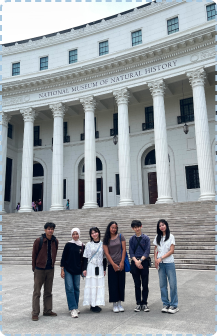
Our first stop was Intramuros — the historic walled city built during the Spanish colonial
era. Walking through its cobblestone streets and past the stone walls of Fort Santiago, I
felt transported through centuries of Philippine history. I learned about José Rizal, the
national hero, whose final hours were spent in a cell within this very fortress. History
stopped being something I had read about and became something I could touch.
We walked along Manila Bay in the late afternoon and witnessed the famous sunset the
city is known for. The sky turned gold and orange over the water, and we took dozens of
photographs knowing these were the last shared memories of our time in the Philippines
together. We also spent time shopping for pasalubong — the Filipino tradition of bringing
home gifts for family and friends — and ended the evening with a group dinner: adobo,
sinigang, lechon, and halo-halo for dessert. It was the perfect way to close the chapter.


Throughout the Programme
English as a Living Bridge :
Communicating Across Cultures
What
English as medium of instruction & daily communication
When
Every single day for four weeks
Who
Me, students, cooperating teacher, fellow SEA Teachers
Why
Shared language across ASEAN participants
Where
Classroom, dormitory, excursions
English was the language that made everything possible during the SEA Teacher
Programme. It was the medium of instruction in my assigned USHS classes, the shared
language between myself and my cooperating teacher Ma'am Aileen de Guzman, and the
common tongue through which student teachers from Indonesia, Thailand, and Japan
communicated with each other every single day.
I taught entirely in English — designing lesson plans, delivering explanations, and
managing classroom discussions all in English. This was a significant challenge at first.
Back home, I could rely on Indonesian when a student did not understand something.
Here, I had to find other ways: simpler vocabulary, gestures, diagrams on the board, or
asking a stronger student to help explain to a classmate. This constraint turned out to be
one of the greatest learning opportunities of the programme.
My confidence in communicative English grew enormously across four weeks. I stopped
translating mentally before speaking and began thinking more directly in English. I also
became comfortable with informal English — joking with students, chatting with my
cooperating teacher over lunch, asking for directions during the Baler excursion. English
stopped being a foreign language I was performing in and became a natural tool of
connection.
Most importantly, I witnessed how English functions as a genuine bridge across cultures.
When my Thai colleague struggled to explain something to a Filipino student and I helped
by rephrasing in simpler English, I saw the immediate power of clear, communicative
language. We were not just practising a subject — we were practising humanity, using
words to understand each other across borders.
"Language is not just grammar and vocabulary. It is the doorway through which people find
each other."